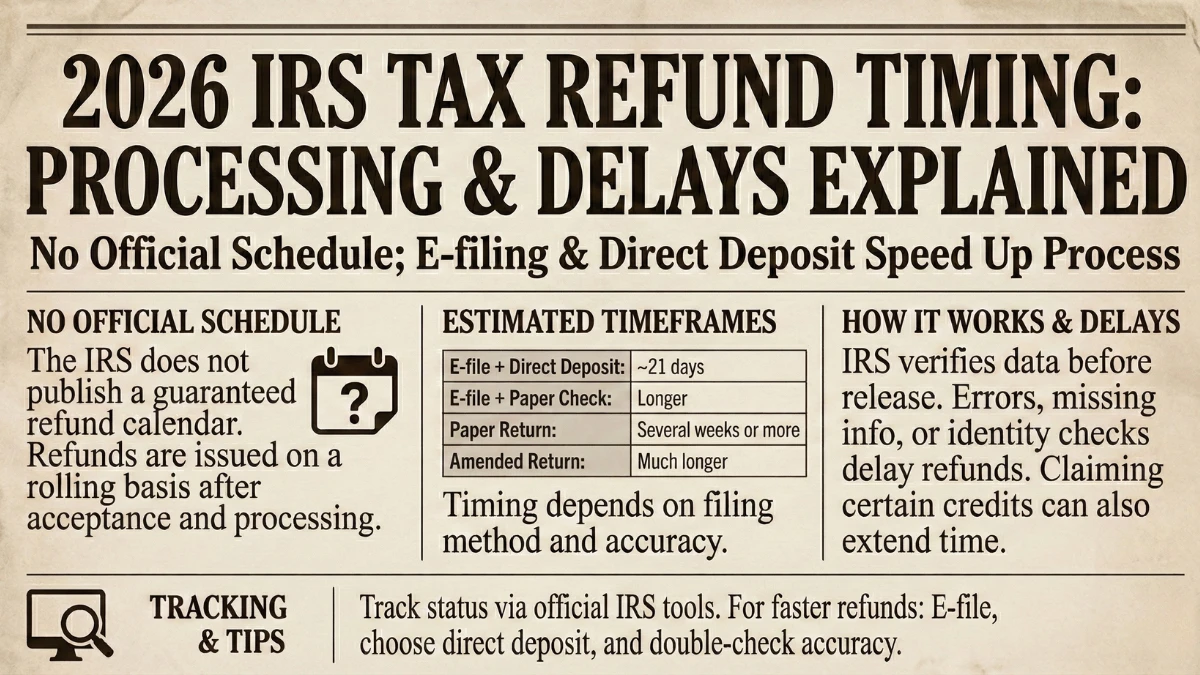
Many taxpayers are searching for clarity on when to expect their IRS tax refund in 2026, especially as filing season approaches. To avoid misleading timelines or guaranteed-date claims, it is important to understand that the Internal Revenue Service does not issue refunds on fixed dates. Refund timing depends on how and when a return is filed, the accuracy of information, and whether additional review is required. This article explains the realistic refund windows, standard IRS processing practices, and common factors that can speed up or delay refunds in 2026.
Is There an Official IRS Refund Schedule for 2026
The IRS does not publish an official refund calendar with guaranteed payment dates. Refunds are issued on a rolling basis after a return is accepted and processed. Any website or source claiming exact refund dates for all taxpayers in 2026 should be treated cautiously.
Estimated IRS Refund Processing Timeframes
| Filing Method | Typical Refund Timing |
|---|---|
| E-file + direct deposit | Around 21 days after acceptance |
| E-file + paper check | Longer than direct deposit |
| Paper-filed return | Several weeks or more |
| Amended return | Much longer processing time |
| Return under review | Timing varies |
How the IRS Processes Refunds
After a return is received, the IRS verifies income data, withholding, credits, and identity details. Refunds are released only after these checks are completed. Returns with errors or mismatched information may require manual review, which delays payment.
Common Reasons IRS Refunds Are Delayed
Refund delays usually occur due to missing information, identity verification, credit reviews, or amended filings. Claiming certain refundable credits or filing incomplete returns can also extend processing time.
How to Track Your IRS Refund
Taxpayers can track refund status using official IRS tools once the return is accepted. Status updates reflect processing stages and do not indicate approval of new benefits or special payments.
What You Can Do to Get Your Refund Faster
Filing electronically, choosing direct deposit, double-checking return accuracy, and responding promptly to IRS notices can help avoid unnecessary delays.
Key Facts
- The IRS does not guarantee refund dates
- E-filing with direct deposit is usually the fastest option
- Paper and amended returns take longer
- Errors or reviews commonly delay refunds
- Only official IRS tools show accurate status
Conclusion
In 2026, IRS tax refunds will continue to be issued based on standard processing timelines, not fixed payout dates. While many taxpayers receive refunds within a few weeks of acceptance, delays can occur for valid reasons. Relying on official IRS guidance is the best way to track and understand your refund timing.
Disclaimer
This article is for informational purposes only and does not constitute tax, legal, or financial advice. IRS refund timelines depend on individual tax returns, processing checks, and official government procedures.