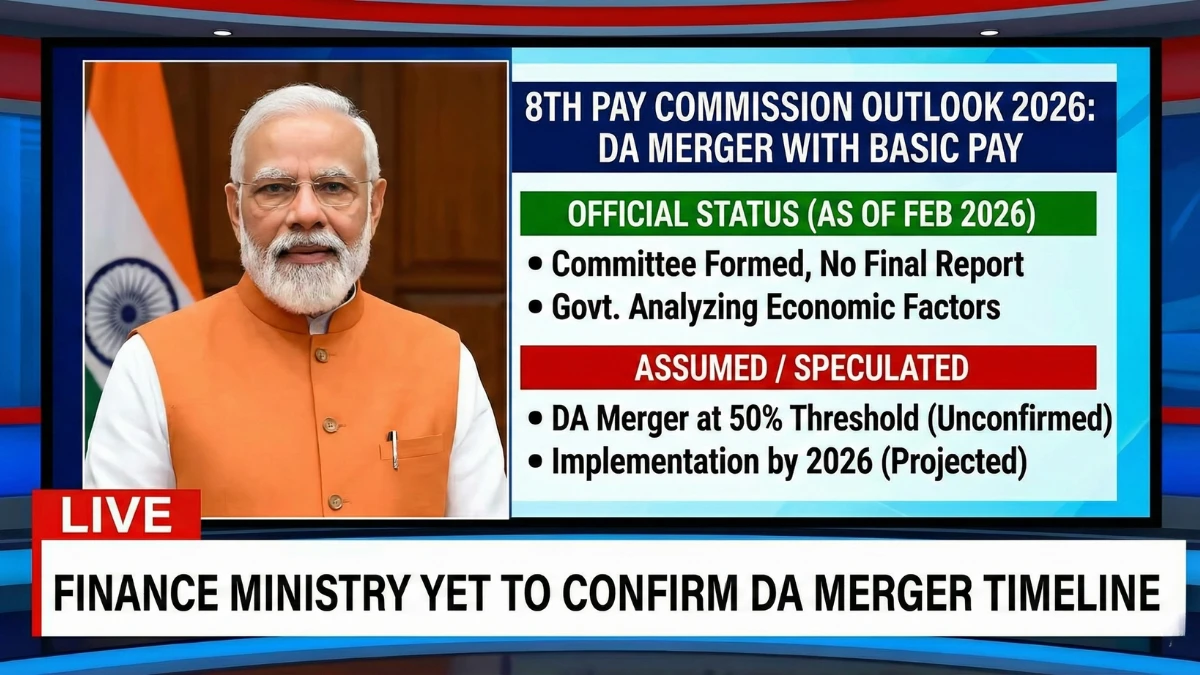
Discussion around the 8th Pay Commission in 2026 has resurfaced with claims that Dearness Allowance (DA) will be merged with basic pay to deliver higher benefits. Because such statements can easily be misunderstood, it is important to separate established pay commission practice from confirmed government decisions. This article explains the current official status, how DA merger typically works during pay revisions, and what employees in India should realistically expect.
Is DA Officially Merged with Basic Pay for the 8th Pay Commission
As of now, DA has not been officially merged with basic pay under the 8th Pay Commission. The commission itself has not yet been formally constituted, and no cabinet decision or gazette notification confirms a DA merger effective in 2026. Any DA merger discussion at this stage is analytical, not approved policy.
Why DA Merger Is Being Discussed
Historically, when a new pay commission is implemented, the accumulated DA is absorbed into the revised basic pay through a fitment factor. This resets DA to zero and creates a new pay structure. Because DA levels have risen over time, discussions naturally emerge about how much may be absorbed in the next revision—but this does not confirm a decision.
How DA Merger Typically Works (Past Practice)
| Component | What Happens |
|---|---|
| Existing basic pay | Forms the base |
| Accumulated DA | Absorbed during revision |
| Fitment factor | Applied to revise pay |
| New basic pay | DA-adjusted base |
| DA reset | Starts from zero post-revision |
Impact on Salary and Allowances
If and when a DA merger occurs as part of a pay commission, it increases basic pay, which then raises DA, HRA, and other allowances calculated as a percentage of basic pay. However, no such impact is applicable yet for 2026, as there is no approved revision.
Impact on Pension Benefits
Pensions are calculated based on last drawn basic pay. A DA merger under a future pay commission would proportionally increase pensions and family pensions. At present, pensions continue under existing pay commission rules with no DA-merger-based revision announced.
Who Takes the Final Decision
The final decision on DA merger, fitment factor, and implementation timeline rests with the Ministry of Finance and the Union Cabinet. Recommendations become effective only after formal approval and notification.
What Government Employees Should Rely On
Employees should rely solely on official government notifications, cabinet decisions, and gazette publications. Calculations and projections shared online should be treated as illustrative estimates, not guaranteed outcomes.
Key Facts
- 8th Pay Commission is not yet constituted
- DA merger with basic pay is not officially approved
- DA merger usually happens only at implementation stage
- Salary and pension changes require cabinet approval
- Current discussions are analytical, not policy decisions
Conclusion
While DA merger with basic pay is a standard feature of past pay commission implementations, there is no official confirmation that such a merger has been approved for the 8th Pay Commission in 2026. Government employees should wait for formal announcements before expecting any changes to salary or pension benefits.
Disclaimer
This article is for informational purposes only and does not constitute financial, legal, or employment advice. Pay commission decisions, DA merger, and benefit revisions are subject to official government approval and notifications.